May 19, 2011

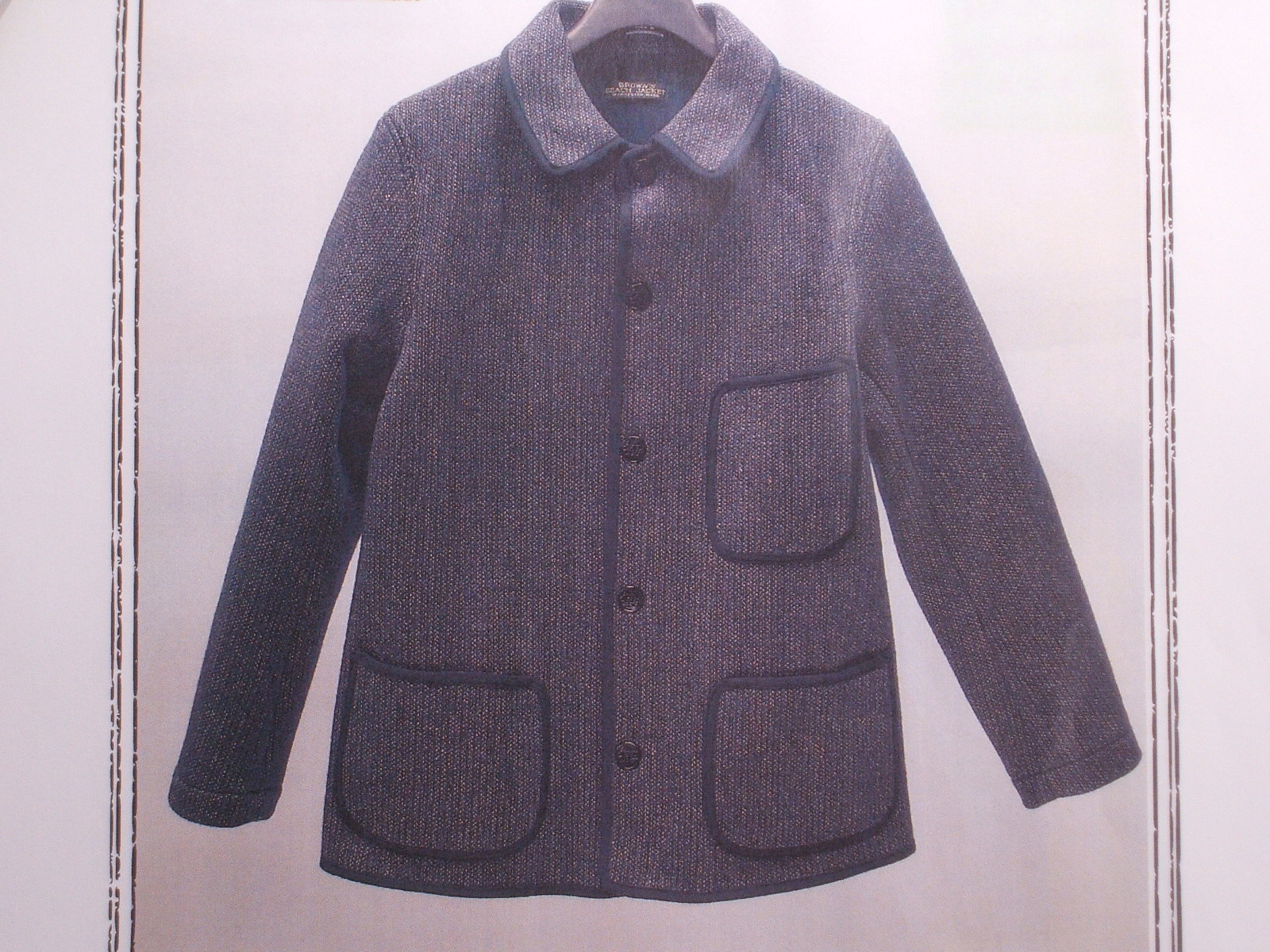
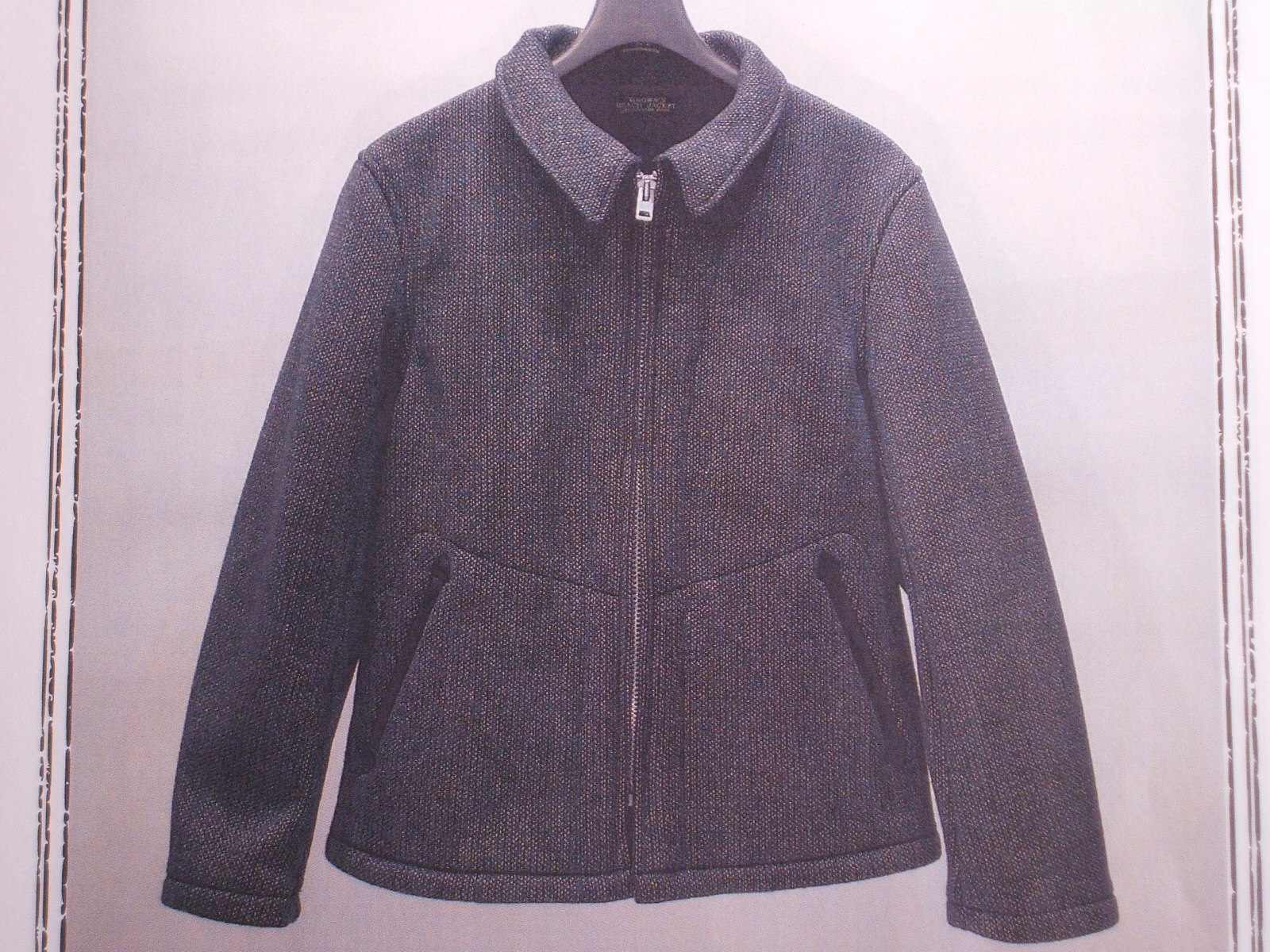
Brown's BEACH JACKETS and VESTS available for pre-order at Speedway Shop

Brown's Beach Jacket print ad, FARM JOURNAL AND FARMERS WIFE  December, 1940. From the vintage workwear.com archive.
Just got word of this fine looking new collection of Brown's Beach Jackets & Vests from John and the folks at Speedway Shop, Sendai Japan. Would love to add the collar-less cardigan BBJ-124 and 3 button BBJ-7224 to the collection if larger sizes were available. Maybe later?


BBJ-124: 48000 JPY plus 3500 JPY for shipping   
BBJ-224: 52000 JPY plus 3500 JPY for shipping
BBJ-324: 32000 JPY plus 2500 JPY for shipping
BBJ-924: 48000 JPY plus 3500 JPY for shipping
BBJ-7224: 55000 JPY plus 3500 JPY for shipping
BBJ-524: 32000 JPY plus 2500 JPY for shipping

Present currency rate has 48000 Japanese yen equaling $587.85 USD. Check XE's Currency Converter for other conversion rates.

All items are available in sizes 34, 36, 38, 40 & 42 only.

All items are available in traditional Brown's Beach Jacket black, or navy color.


*No tax is charged if you are outside of Japan.
*Delivery is in October.
*
Pre-order items must be paid for to be reserved. Speedway Shop graciously requests that you not ask one to be held for you.


If you have any questions or to arrange for pre-order, please feel free to email the folks at Speedway anytime and they will get back with you ASAP. 
email shopatspeedway@hotmail.com

Or check em out at.
www.speedway-shop.com <http://www.speedway-shop.com/>
Speedway on
Rakuten <http://www.rakuten.ne.jp/gold/speedway-shop/>
Speedway on eBay  <
http://stores.shop.ebay.com/Speedway-shop>        


A great opportunity to give business and support to someone close to those most effected by the ongoing disaster, someone who's making a difference. 

May 11, 2011

Seattle Gas Co."Shops" Aug. 11 1938... Gasworks Park, Present Day


Rose Bowl find from this past Sunday. Panoramic workers photograph... Seattle Gas Co. "Shops" Seattle, Washington, Aug 11, 1938.  Photo credit C. Hafford
Scanned image revealing a treasure trove of vintage workwear including a great collection of Express Stripe Overalls & Coveralls, Chambray Work Shirts, Work Boots, Hats and Caps.  Too may great looks to mention them all but 5th from lower left and what looks to be the main man top row center (seen top row 2nd from right) are killing it.
Great glasses seen upper row 3rd from right, awesome pocket on the coveralls upper row 5th from right and jacket with ball chain zipper pull seen bottom row 2nd from left are just a few of the many details worth mentioning.


Seattle's Gasworks Park... from a place of  natural beauty to an industrial wasteland and back again.
From its industrial past rises one of the most unusual parks in the world.


May 3, 2011

Vintage FINCK'S Chore Jacket and Overalls "Wear Like a Pig's Nose"

Unused 1950's era FINCK'S RED \ BAR WORK GARMENTS promotional matchbook
Vintage 1950's era FINCK'S RED \ BAR Work Jacket in rare "dot" pinstripe fabric
Front watch pocket with RED \ BAR loomed rayon label & engraved FINCKS "pig" snap type button
FINCK'S RED \ BAR-UNION MADE-SANFORIZED loomed rayon lot size tag

Right side chest interior pocket
United Garment Workers of America union label
Matching FINCK'S RED \ BAR Overalls
Great RED BAR hardware with embossed pig
FINCK'S "Wear Like A Pig's Nose" UNION MADE SANFORIZED loomed rayon label located on back
United Garment Workers of America union label

Apr 25, 2011

DISFARMER The Vintage Prints


The legendary Mike Disfarmer is considered one of the great portraitists in the history of photography. As the resident photographer in tiny Herbert Springs, Arkansas, he captured the faces of the American heartland at a defining time in history in which the Great Depression yielded to World War II, and the sons of the farm donned their country's uniform and headed off to foreign shores. He was also a true American eccentric: born Mike Meyer in 1884, he legally changed his name to Disfarmer to disassociate himself, not only from the farming community in which he piled his trade, but from his own kinfolk - claiming that a tornado had accidently blown him onto the Meyer family farm as a baby.

All photos above from the hardcover book DISFARMER The Vintage Prints.
Previously, Disfarmers work was known only from a cache of glass-plate negatives that had been salvaged from his studio after his death. The book DISFARMER The Vintage Prints presents his original vintage prints for the very first time. It is the culmination of an unprecedented two year reclamation project in which a team of dedicated researchers scoured every family album in every home along every dirt road in Cleburne County, Arkansas. via DISFARMER The Vintage Prints

DISFARMER The Vintage Prints is one of two Disfarmer books in our collection and one of three hardcover books currently available which also include Mike Disfarmer: ORIGINAL DISFARMER PHOTOGRAPHS and DISFARMER: The Herbert Springs Portraits, 1939-1946.

Must have material for those who appreciate the dust bowl & depression era photography of Dorothea Lange, Walker Evans & Lewis Hine.

http://www.disfarmer.com
http://www.disfarmer.org
Send a Disfarmer postcard e-card here. 


Guitarists Bill Frisell, who I had the pleasure of seeing perform live a half dozen odd times in the 1990's, recently released the album Disfarmer based on Disfarmer's work and performed the Disfarmer Project live to a slide show of Disfarmer's portraits. While initially drawn to his over the top, 40 genres of music in 60 seconds playing with John Zorn's Punk, Jazz, Speed-Metal, Film Score mash-up group Naked City, I enjoy and appreciate Frisell's truly unique and American musical voice explored on his later solo work. 

More info and song samples from Disfarmer can be found at Bill Frisell's website here. Scroll down the discography and click on Disfarmer. Highly recommended as the proper soundtrack to these wonderfull images. 

 He's a guitar tactician with warmth and a composer of unclassifiable songs. As a solo artist, Frisell is known largely for drawing upon the affects of Americana — folk, country and western, what-have-you — in ways you wouldn't immediately call jazz, but which draw from jazz in a way that implies no better descriptor. via npr.org

In 2008, a picture of Disfarmer was used on the 80th Academy Awards telecast as the alleged portrait of Roderick Jaynes, the film editing pseudonym of the Coen brothers, who was nominated at that ceremony for editing the Coens' film No Country for Old Men. Disfarmer's photo was supplied to the Academy of Motion Picture Arts and Sciences by the Coens after Jaynes' nomination. via wikipedia

Apr 22, 2011

More LITTLE FEAT In Concert... Pinkpop, The Netherlands 1976

Little Feat circa 1969-1979... so much talent, so underrated, so sorely missed. 
Lowell George - Guitar, Harmonica, Vocals
Paul Barrere - Guitar, Vocals
Bill Payne - Keyboards, Vocals
Kenny Gradney - Bass (1972 - 2011) 
Roy Estrada - Bass (1969-1972)
Richie Hayward - Drums, Backing Vocals
Sam Clayton - Congas, Percussion, Vocals

The Frank Zappa connection.


Lowell George met Bill Payne when George was a member of Frank Zappa's Mothers of Invention. Payne had auditioned for the Mothers, but had not joined. They formed Little Feat along with former Mothers' bassist Roy Estrada and drummer Richie Hayward from George's previous band, the Factory. The name of the band came from a comment made by Mothers' drummer Jimmy Carl Black about Lowell's "little feet." The spelling of "feat" was an homage to The Beatles.


There are three legends about the genesis of Little Feat. One has it that George showed Zappa his song "Willin'," and that Zappa fired him from the Mothers of Invention, because he felt that George was too talented to merely be a member of his band, and told him he ought to go away and form his own band. The second version has Zappa firing him for playing a 15 minute guitar solo—with his amplifier off. The third version says that Zappa fired him because "Willin'" contains drug references ("weed, whites and wine"). George often introduced the song as the reason he was asked to leave the band. On Oct. 18, 1975 at the Auditorium Theater in Rochester New York while introducing the song, George comments that he was asked to leave the band for "writing a song about dope".


In any version, Zappa was instrumental in getting George and his new band a record contract. When "Willin'" was recorded for the Little Feat album, George hurt his hand in an accident with a model airplane, so Ry Cooder sat in and played the song's slide part. Lowell's accident is referenced on the cover art of the band's 1996 album Under the Radar. "Willin'" was re-recorded (this time with Lowell playing) on Little Feat's second album Sailin' Shoes, which was also the first Little Feat album to include cover art by Neon Park, who had painted the cover for Zappa's Weasels Ripped My Flesh.  Via Wikipedia

Little Feat at The 1976 Pinkpop Music Festival, The Netherlands via jnerrot

Apr 21, 2011

LITTLE FEAT Live in Studio... One Of The Greatest Rock & Roll Bands Ever

Rock & Roll Doctor and Oh Atlanta... Turn it up!


R.I.P. Lowell George and Richie Hayward.

Apr 20, 2011

ERWIN COTTON MILLS CO. VINTAGE BLUSERGE DENIM CHORE JACKET

The Erwin Cotton Mills Co. of Durham North Carolina was founded in 1892.  The two-story brick factory included a picker building, dyehouse, boiler room, and engine house. The mills had 11,000 spindles and 360 looms producing a variety of fabrics.
Rows of houses were built for the workers. By 1895, some 375 families were living in the mill village. The end of the line for Erwin Mills came in 1986.
 Erwin Mills Machine Shop circa 1967.

Vintage 1950's era ERWIN Work Jacket / Chore Coat constructed using BLUSERGE SANFORIZED indigo dyed selvedge denim. From The San Fernando Valley Mercantile Co. archive . 
The SANFORIZED Shrunk process was patented in 1928, and was first used by Erwin Mills in 1936 to make denim for overalls marketed under J.C. Penney’s Big Mac label.


The community of Erwin began with the erection of a cotton mill in 1903.
The Erwin Mills Company was formed in 1892 by a group of financiers who included W.A. Erwin and J.B. "Buck" Duke. Construction started in the spring of 1903, and the mill was in full operation by the latter part of 1905. The site had been selected because of the proximity of the Cape Fear River, the proximity of the cotton fields, and the probable supply of adequate labor.


The town which was constructed to house the workers of the mill was originally called Duke, but its name was changed to Erwin in 1926 when Trinity College in Durham became Duke University.


The mill hosted an annual celebration for the mill employees called “Overall Days” and from there the Erwin chamber of commerce started sponsoring a fall festival that is now called “Denim Days”. This festival is held each fall, the first weekend of October.